Teach spelling rules with related phonograms.
Introduce a spelling rule that explains the sound(s) of a phonogram in the same lesson. Practice reading and spelling words that use the phonogram and rule.

Some spelling rules explain where a particular phonogram is used or which sound a phonogram makes.

Some spelling rules support grammar instruction. These rules explain concepts such as how to make a noun plural or a verb past tense.
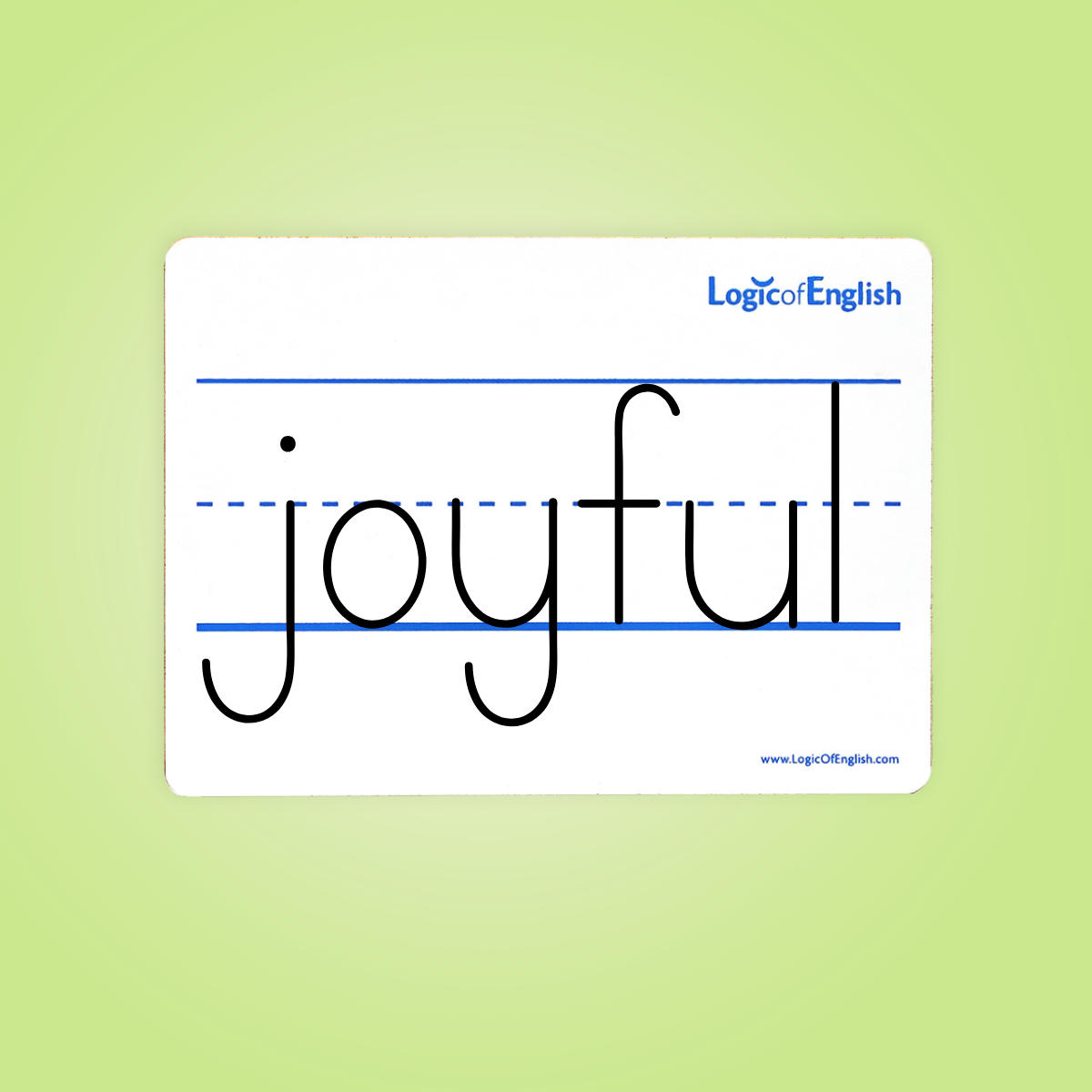
Though prefixes are just added to the beginning of the word, adding a suffix is guided by three spelling rules.

There are nine reasons for a silent E in English! Knowing them all eliminates exceptions.
Introduce a spelling rule that explains the sound(s) of a phonogram in the same lesson. Practice reading and spelling words that use the phonogram and rule.

Ask students to identify spelling rules within words during spelling analysis. This will support students in developing the confidence to read, spell, and explain any word!

Teach how the rules build on one another. For example, begin instruction by teaching the rule, C always softens to /s/ when followed by an E, I, or Y. Then teach the silent E rule, C softens to /s/ because of the E.
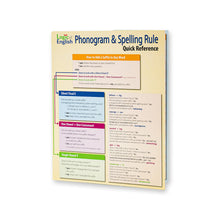
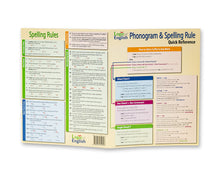
Rule 1: C always softens to /s/ when followed by E, I, or Y. Otherwise, C says /k/.
Rule 2: G may soften to /j/ only when followed by E, I, or Y. Otherwise, G says /g/.
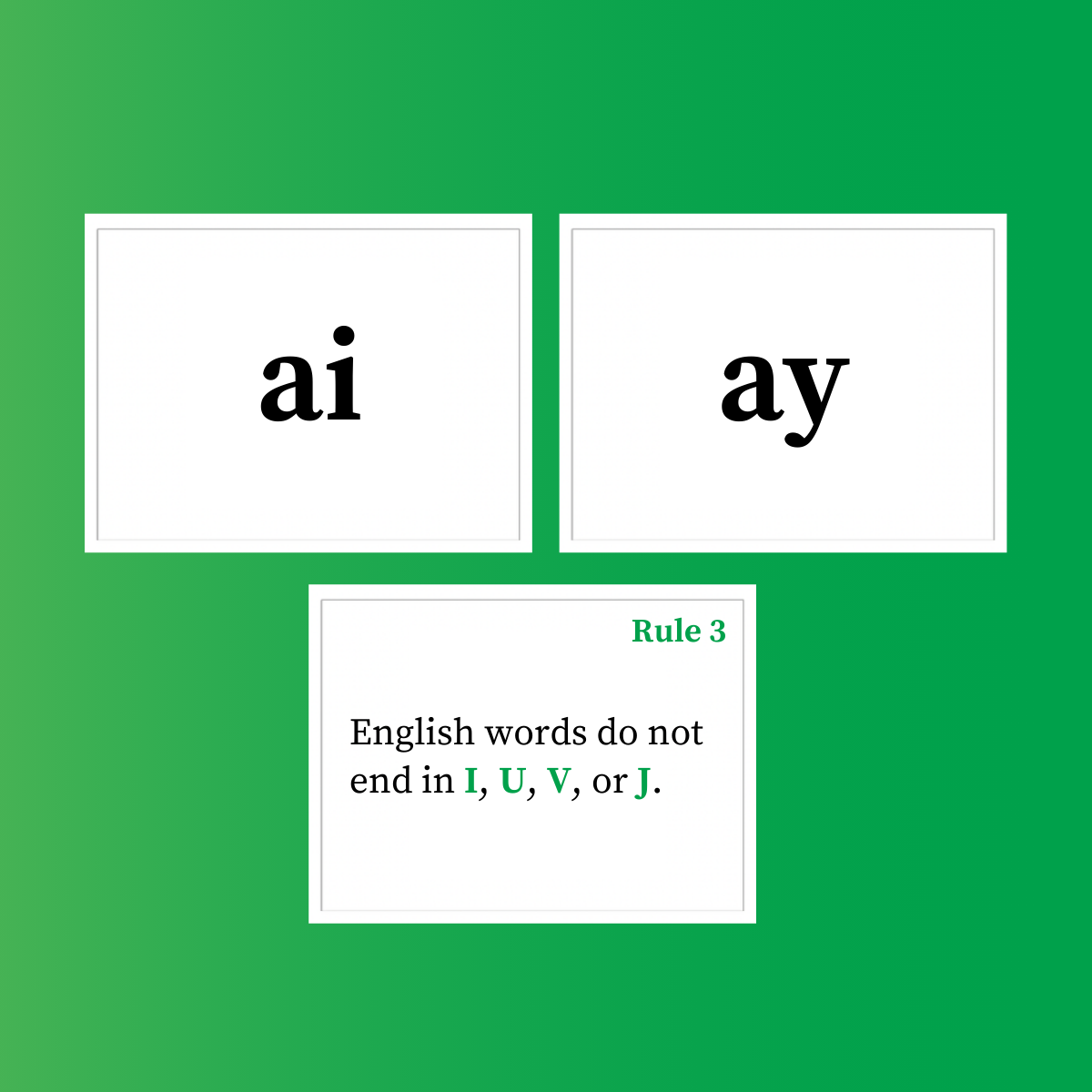
Rule 3: English words do not end in I, U, V, or J.
Rule 4: A E O U usually say their long sounds at the end of the syllable.
Rule 5: I and Y may say /ĭ/ or /ī/ at the end of a syllable.
Rule 6: When a one-syllable word ends in a single-vowel Y, it always says /ī/.
Rule 7: Where I and Y may say long /ē/:
Rule 8: I and O may say /ī/ and /ō/ when followed by two consonants.
Rule 9: AY usually spells the sound /ā/ at the end of a base word.
Rule 10: When a word ends with the phonogram A, it says /ä/. A may also say /ä/ after a W or before an L.
Rule 11: Q always needs a U; therefore, U is not a vowel here.
Rule 12: Silent Final E Rules:
Rule 13: Drop the silent final E when adding a vowel suffix only if it is allowed by other spelling rules.
Rule 14: Double the last consonant when adding a vowel suffix to words ending in one vowel followed by one consonant only if the syllable before the suffix is stressed.*
*This is always true for one-syllable words.
Rule 15: Single-vowel Y changes to I when adding any ending, unless the ending begins with I.
Rule 16: Two I’s cannot be next to one another in English words.
Rule 17: TI, CI, and SI are used only at the beginning of any syllable after the first one.
Rule 18: SH spells /sh/ at the beginning of a base word and at the end of the syllable. SH never spells /sh/ at the beginning of any syllable after the first one, except for the ending -ship.
Rule 19: To make a verb past tense, add the ending -ED unless it is an irregular verb.
Rule 20: -ED, past tense ending, forms another syllable when the base word ends in /d/ or /t/. Otherwise, -ED says /d/ or /t/.
Rule 21: To make a noun plural, add the ending -S, unless the word hisses or changes; then add -ES. Some nouns have no change or an irregular spelling.
Rule 22: To make a verb 3rd person singular, add the ending -S, unless the word hisses or changes; then add -ES. Only four verbs are irregular. (has, does, goes, is)
Rule 23: AL- is a prefix written with one L when preceding another syllable.
Rule 24: -FUL is a suffix written with one L when added to another syllable.
Rule 25: DGE is used only after a single vowel which says its short (first) sound.
Rule 26: CK is used only after a single vowel which says its short (first) sound.
Rule 27: TCH is used only after a single vowel which says its short or broad sound.
Rule 28: AUGH, EIGH, IGH, OUGH. Phonograms ending in GH are used only at the end of a base word or before the letter T. The GH is either silent or pronounced /f/.
Rule 29: Z, never S, spells /z/ at the beginning of a base word.
Rule 30: We often double F, L, and S after a single, short or broad vowel at the end of a base word. Occasionally other letters also are doubled.
Rule 31: Schwa Rules